
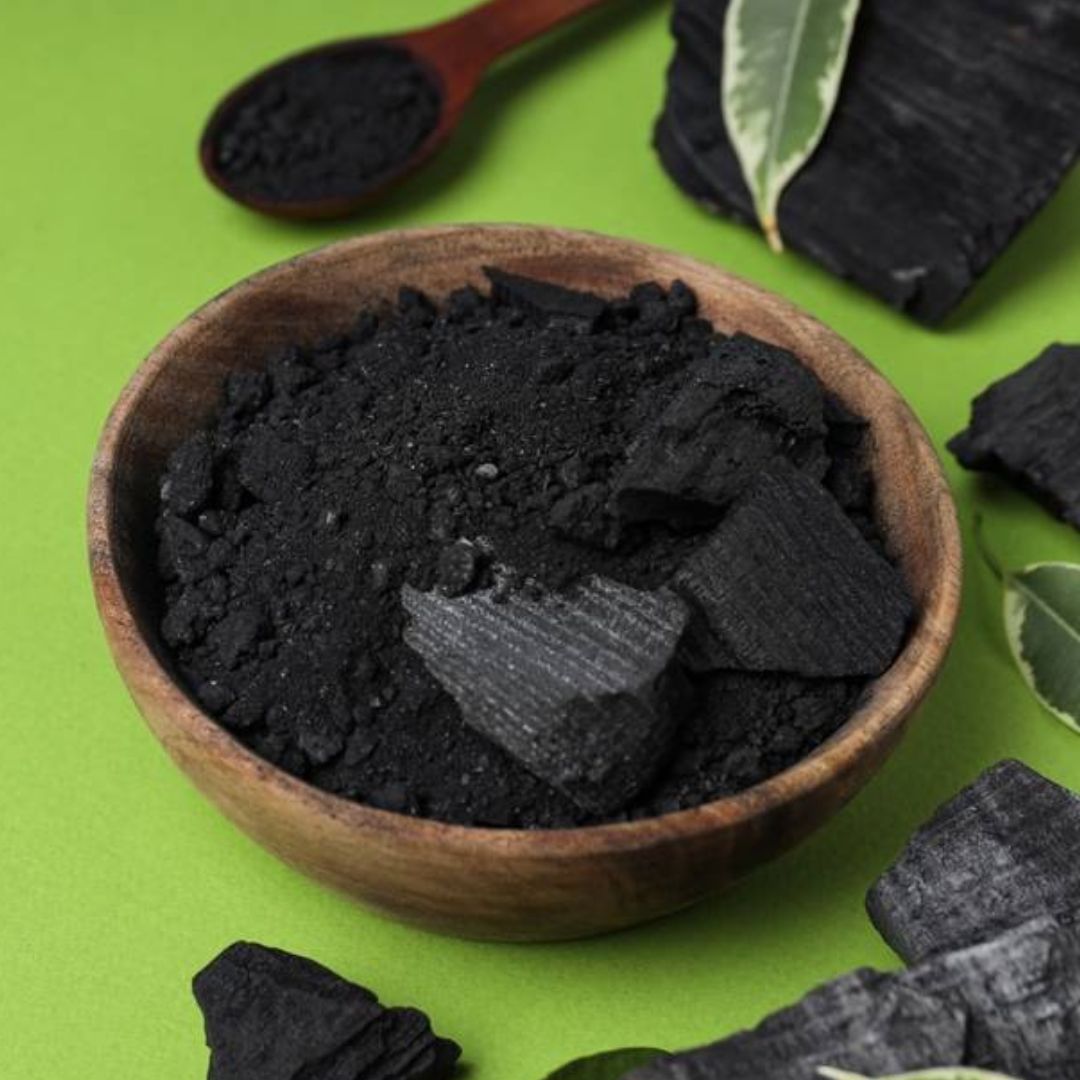
Activated vegetable charcoal is a natural product that, thanks to its remarkable adsorption properties, has become a valuable ally for our body. Derived mainly from wood or nut shells, vegetable charcoal is "activated" by a high-temperature heating process, which increases its adsorption surface area and makes it a powerful tool for eliminating unwanted substances from our body. Available in various forms - powder, capsules, granules - it is commonly used to treat various disorders, such as bloating or other digestive problems.
This page will explore this topic in detail, reviewing its benefits, optimal use, and precautions to maximize its effectiveness while ensuring safe use.

The importance of timing in taking activated vegetable charcoal
Before diving into the question of the optimal timing for taking activated vegetable charcoal, it is essential to understand why this factor is crucial. Indeed, the adsorption capacity of charcoal, linked to its large surfactant, can be influenced by various elements.
The importance of timing to maximize effectiveness
Activated vegetable charcoal acts like a sponge in our body, capturing unwanted gases, substances, and toxins to facilitate their elimination. Its effectiveness largely depends on the timing of intake. Indeed, this natural product is known for its virtues on intestinal transit and digestion, helping notably to reduce bloating. But, for it to be truly effective, it is recommended to take it at specific times of the day, which we will detail later.
Factors influencing the timing of intake
Several factors can influence the optimal time to take vegetable charcoal. For example, the type of meal consumed (rich in fats, proteins, etc.), medication intake, or the individual's health status (existing digestive disorders, etc.) can all affect how vegetable charcoal is absorbed and utilized by the body.
The effect of vegetable charcoal on the absorption of other nutrients and medications
It is also crucial to note that activated vegetable charcoal can interfere with the absorption of certain nutrients and medications. Indeed, its adsorption capacity does not distinguish beneficial substances from harmful ones. Therefore, the timing of its intake relative to meals and medications is an essential point to consider to avoid any undesirable interactions and maximize its health benefits.
The best times to take activated vegetable charcoal
Knowing that activated vegetable charcoal has a high adsorption capacity and that it can interact with other substances in the body, determining the optimal time of intake is crucial to maximize its benefits while minimizing the risk of interference with other nutrients or medications.
Morning intake
Taking activated vegetable charcoal in the morning, on an empty stomach, can help detoxify the body and start the day right. It can contribute to good digestion throughout the day, particularly by reducing bloating and gas. However, it is important to consider morning medications that might be absorbed by the charcoal.
Intake around meals
Vegetable charcoal is often recommended for digestive disorders such as bloating after meals. It can be taken just before or after a meal to help reduce gas formation. However, given its effect on nutrient absorption, it may be preferable to take it between meals, especially if your diet is rich in essential nutrients.
Evening intake
Activated vegetable charcoal can also be taken in the evening, before bed. This use is particularly appreciated in cases of difficult digestion or nocturnal bloating. Again, the important thing is to ensure that charcoal intake does not coincide with important medications.
Contraindications and precautions when taking activated vegetable charcoal
While activated vegetable charcoal is known for its benefits on digestion and intestinal transit, it is crucial to take certain precautions when using it. Indeed, its adsorption properties can also interact with other substances in the body, some of which may be beneficial or even essential.
Interaction with medications
Activated vegetable charcoal can adsorb certain medications, particularly their absorption and effectiveness. It is therefore recommended to take medications separately, generally two hours before or after, to avoid these undesirable interactions.
Effects on nutrient absorption
Similarly, activated vegetable charcoal can also lead to the absorption of certain nutrients, such as vitamins and minerals. This is why it is preferable to take it between meals rather than during them, especially if your diet is rich in essential nutrients.
Dosage and dehydration
An excessive dose of activated vegetable charcoal can cause constipation, hence the importance of drinking plenty of water when taking it. Furthermore, as with any active product, it is essential to respect the recommended dosage to avoid any undesirable effects.
Contraindications
Finally, even if vegetable charcoal is traditionally well tolerated, certain people, especially those suffering from chronic intestinal disorders or serious illnesses,should consult a healthcare professional before starting a course of treatment.
We recommend these other pages:


Leave a comment
This site is protected by hCaptcha and the hCaptcha Privacy Policy and Terms of Service apply.